Problem Ian Agol and Matthias Goerner observed that the 4x5 chessboard complex is the complement of many distinct links in the 3-sphere. Their observation is non-constructive, as it uses the resolution of the Poincare Conjecture. Find specific links that have the 4x5 chessboard complex as their complement.
Let be a class of finite relational structures. We denote by the number of structures in over the labeled set . For any class definable in monadic second-order logic with unary and binary relation symbols, Specker and Blatter showed that, for every , the function is ultimately periodic modulo .
Question Does the Blatter-Specker Theorem hold for ternary relations.
Problem Given a link in , let the symmetry group of be denoted ie: isotopy classes of diffeomorphisms of which preserve , where the isotopies are also required to preserve .
Now let be a hyperbolic link. Assume has the further `Brunnian' property that there exists a component of such that is the unlink. Let be the subgroup of consisting of diffeomorphisms of which preserve together with its orientation, and which preserve the orientation of .
There is a representation given by restricting the diffeomorphism to the . It's known that is always a cyclic group. And is a signed symmetric group -- the wreath product of a symmetric group with .
Conjecture For every fixed graph , there exists a constant , so that every graph without an induced subgraph isomorphic to contains either a clique or an independent set of size .
An -factor in a graph is a set of vertex-disjoint copies of covering all vertices of .
Problem Let be a fixed positive real number and a fixed graph. Is it NP-hard to determine whether a graph on vertices and minimum degree contains and -factor?
Conjecture Let be a Cantor set embedded in . Is there a self-homeomorphism of for every greater than so that moves every point by less than and does not intersect ? Such an embedded Cantor set for which no such exists (for some ) is called "sticky". For what dimensions do sticky Cantor sets exist?

 login/create account
 is called a Diophantine
  -tuple if
  is a perfect square for all
  .
.  is a Diophantine quadruple and
  , then
 structurally stable diffeomorphism is hyperbolic.
  be a class of finite relational structures. We denote by
  the number of structures in
  . For any class
  , the function
  such that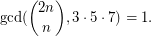
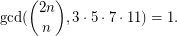
![\[ F_n = 2^{2^{n } } + 1 \]](/files/tex/70ca73d7e82af2fee084a8417e172c58cf78b376.png) Square-Free?
Square-Free?
 in
in  , let the symmetry group of
  ie: isotopy classes of diffeomorphisms of
  of
of  is the unlink. Let
  be the subgroup of
  consisting of diffeomorphisms of
  given by restricting the diffeomorphism to the
  is a signed symmetric group -- the wreath product of a symmetric group with
  .
.  , there exists a constant
  , so that every graph
  without an induced subgraph isomorphic to
  .
.  for every filter objects
  and
and  and a funcoid
  ?
?  be a fixed positive real number and
  contains and
  denote the graph with vertex set consisting of all lines through the origin in
  and two vertices adjacent in
  ?
?  so that every
  , every (loopless) graph
  immerses
  .
.  . Is there a self-homeomorphism
  of
of  greater than
  so that
  does not intersect
  ,
,  so that
  does not contain an odd edge-cut.
  on an even number of vertices can be decomposed into
  directed paths.
  Drupal
 CSI of Charles University